
by Subhankar Mitra | Dec 17, 2025 | Real Estate
Introduction: A Fresh Financial Landscape for Homebuyers
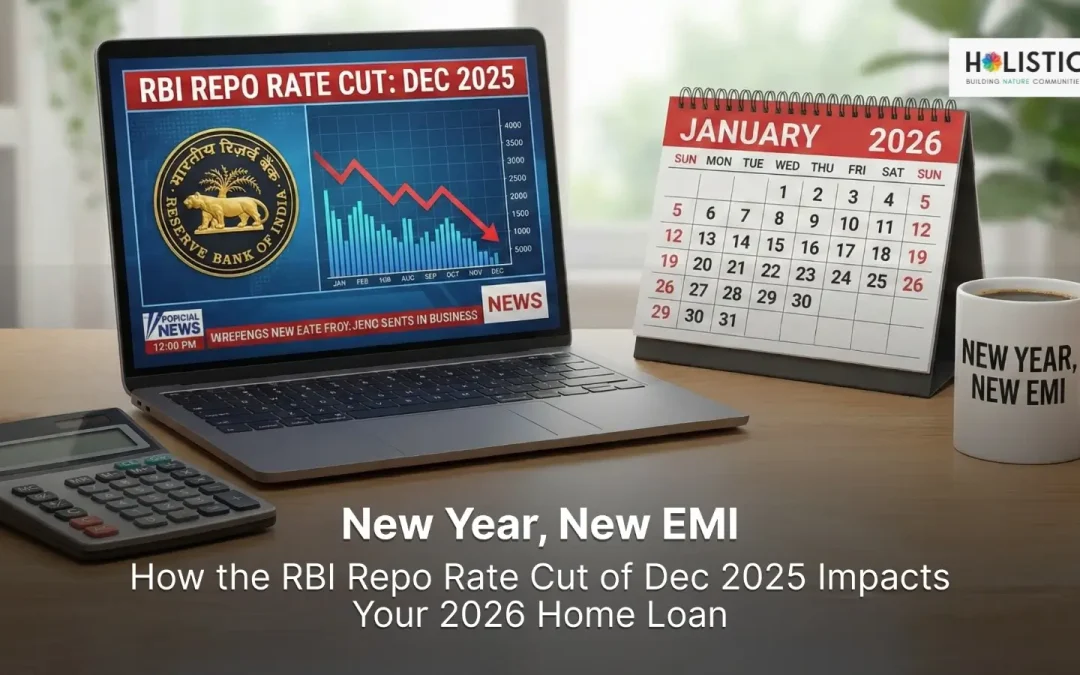
As the calendar turns and we welcome 2026, many aspiring homeowners and existing borrowers face a transformed borrowing climate. The Reserve Bank of India (RBI) has lowered its repo rate by 25 basis points to 5.25 percent, a move expected to ripple through the entire credit market. This policy shift reconfigures how home loan EMIs will behave in the coming year and why it matters deeply for anyone planning to finance a home in 2026.

What Is the Repo Rate and Why Does It Matter
The repo rate is the interest rate at which the RBI lends short-term funds to commercial banks. When this rate falls, the cost of borrowing for banks decreases, and that theoretically leads to lower interest rates for home loan borrowers as well.
How the Repo Rate Shapes Lending Trends
Repo rate changes act like tectonic plates under the financial ecosystem: when the RBI lowers the benchmark, it nudges commercial lenders toward cheaper lending rates. This creates downstream effects that reach the borrower’s monthly budget in the form of reduced EMIs and sometimes shorter loan tenures.
The Monetary Policy Committee’s Role
The RBI’s Monetary Policy Committee (MPC) meets regularly to calibrate the repo rate based on inflation, growth, and broader macroeconomic conditions. The December 2025 cut is part of an accommodative stance that reflects stable inflation and robust economic momentum.
Why the December 2025 Cut Is Particularly Noteworthy
The latest repo rate decision marked the fourth cut in 2025, bringing the total reduction this year to 125 basis points. It signals that monetary policy is tilted toward supporting borrowing and credit expansion.
Borrowing Becomes Cheaper, But With Nuance
While the RBI’s policy change sets the stage for lower lending rates, how and when this benefit reaches every home loan account depends on individual loan structures and bank practices.
Understanding Home Loan Benchmarks
Home loans in India are often linked to benchmarks such as the Repo Linked Lending Rate (RLLR), Marginal Cost of Funds-based Lending Rate (MCLR), or other internal reference rates. The extent and timing of benefit from a repo rate cut vary based on which benchmark your loan uses.
RLLR: The Most Direct Transmission
Borrowers whose home loans are linked directly to the repo rate or RLLR typically see faster and clearer reductions in interest rates — and therefore in EMIs — following a policy cut.
MCLR and Internal Benchmarks
Loans tied to internal benchmarks like MCLR may not see an immediate change because banks adjust these rates at their discretion and on their own reset cycles.

EMI Relief: What Home Loan Borrowers Can Expect
With the repo rate cut to 5.25 percent, many lenders have already begun trimming lending rates. These changes will eventually show up as lower EMIs, offering real relief to borrowers.
How Much Can EMIs Really Drop?
The exact reduction in your monthly payment depends on your loan amount, interest rate spread, and remaining tenure. Even a modest basis-point drop can translate into significant lifetime savings, especially for long-duration home loans.
Options for Borrowers in 2026
If the goal is to benefit from lower borrowing costs, borrowers have choices beyond waiting passively for rate changes. You can request your bank to reduce your EMI amount while keeping the same tenure, or alternatively, maintain your EMI but shorten the tenure to reduce total interest paid.
Negotiating With Your Lender
In some cases — particularly with private banks — negotiating a reduction in your interest spread may require initiative. A strong credit score and current market knowledge can be powerful leverage.

Impact on New Home Loan Applicants
Prospective homebuyers planning to apply in 2026 may find that lenders offer more competitive interest rates, making borrowing more affordable than in previous years. This can widen the window for aspirational homeownership — especially for second homes and planned residences in developments like those from Holistic Group.
Also, know why Gated Second Home Communities Are Ideal for Today’s Professionals?
The Broader Financial Context
Lower interest rates often encourage spending and investment in assets like real estate, which in turn can stimulate broader economic activity. The real estate market — including premium and nature-centric communities — stands to benefit from improved sentiment and demand.
Effects on Savings and Fixed Deposits
While borrowing becomes cheaper, savers might see lower returns on fixed deposits and other interest-bearing instruments. This dual impact is part of the trade-off inherent in monetary policy shifts.
Tax Implications and Strategic Planning
Lower EMIs free up disposable income, which can be redirected toward tax-saving instruments or principal prepayments on your home loan to accelerate wealth creation over time.
Choosing the Right Loan Tenure
A rate cut offers an opportunity to reassess your loan tenure. Reducing the term while keeping EMIs stable can dramatically cut the total interest outgo over the life of the loan.
Real Estate Buying Sentiment in Early 2026
The combination of lower borrowing costs and renewed buyer confidence may catalyse interest in premium developments and gated communities. Buyers seeking long-term homes or investment properties, like those offered by Holistic Group, can capitalise on this environment.
Planning Your Finances Around EMIs
A proactive approach to managing your home loan — including leveraging upcoming rate cuts — can significantly influence your financial health. Creating a budget that anticipates potential EMI reductions can unlock new avenues for saving and spending.
When the Benefit Might Show Up
Transmission of policy rate changes to your bank account isn’t always instantaneous. It might take one or two reset cycles for changes to reflect in your EMI — especially for loans tied to internal benchmarks.
What to Do If Your Bank Is Slow to Pass on Cuts
If your lender appears reluctant to reduce your loan rate promptly, it’s possible to raise the issue formally or even compare offers from competing banks to ensure you’re not leaving savings on the table.
The Psychological Boost of Lower EMIs
Reduced monthly payments not only help your wallet but also instill a sense of financial breathing room. This can empower professionals to pursue long-term goals while managing cash flows confidently.
Why 2026 Could Be a Strategic Year to Buy
With favourable lending conditions and the prospect of ongoing policy support, 2026 may well be a decisive year for homebuyers. Whether you’re buying your first home or a second retreat close to nature, market conditions are aligning to enhance affordability.
Also read about Karjat Real Estate Boom: The Navi Mumbai Airport Effect
Conclusion: New Year, New Possibilities
The RBI’s repo rate cut in December 2025 has set the tone for a more accessible home loan environment in 2026. Lower EMIs, enhanced affordability, and strategic borrowing choices provide both existing and prospective borrowers with a compelling reason to reassess their home financing plans. In this evolving landscape, informed decision-making can turn a simple policy shift into a personal advantage.
by Subhankar Mitra | Nov 20, 2025 | Real Estate
Introduction: the paradigm shift in Roha’s real estate landscape
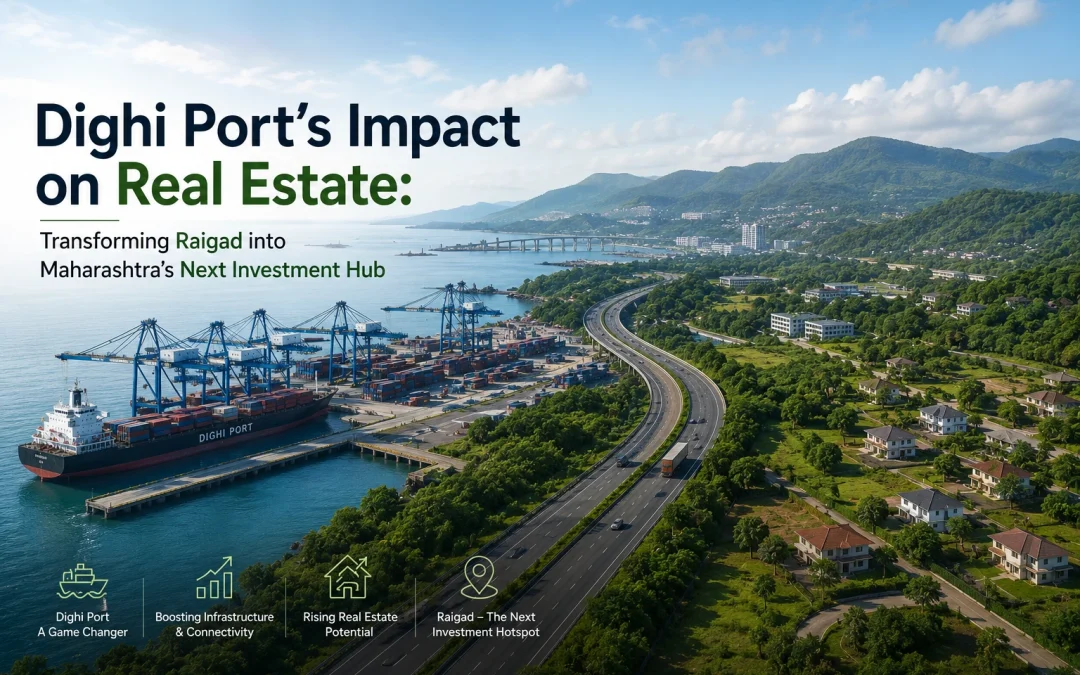
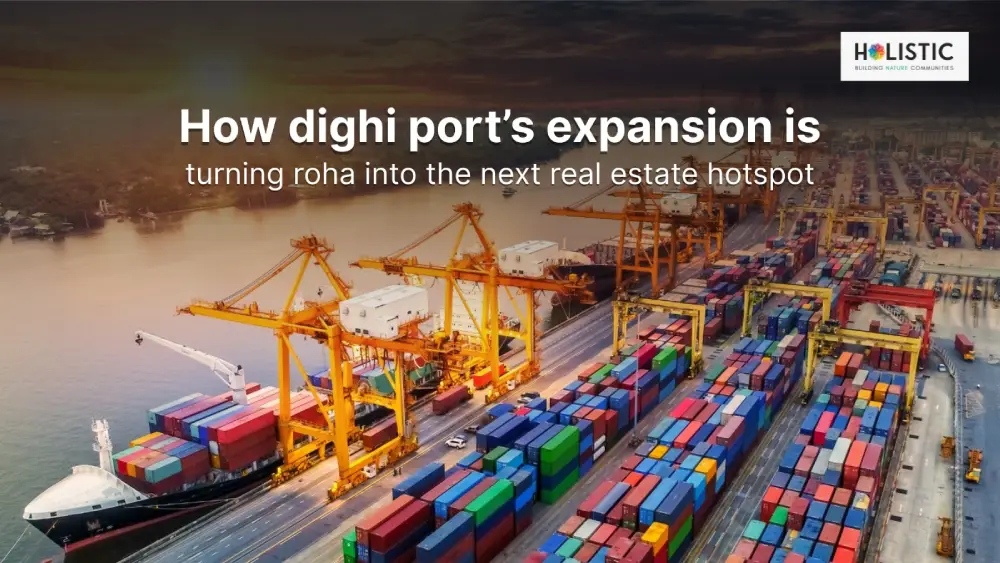
The coastal areas of Maharashtra have always had great potential, but major infrastructure projects can quickly turn them into hotspots for real estate. This is exactly happening in Roha. With the expansion of Dighi Port, Roha is now gaining attention. Better industrial facilities, improved roads and transport, and growing lifestyle options are making it an attractive place for both investors and people looking to settle there.
What is Dighi Port and Why Its Expansion Matters
A Brief History of Dighi Port
Dighi Port is a growing maritime gateway on the Konkan coast of Maharashtra. It was acquired by Adani Ports and Special Economic Zone Ltd. (APSEZ) in February 2021, marking a turning point in its trajectory.
The Latest Expansion and Investment Commitments
In October 2025, the state government signed a memorandum of understanding (MoU) with Adani for an investment worth ₹42,500 crore to expand Dighi Port. This massive infusion signals the port’s upgrade from a regional facility to a major multi-modal node. The port expansion is not just about more berths—it’s about logistics, connectivity, and industrial clustering.

The Strategic Location of Roha – Why It’s Poised for Growth
Roha’s Geographic and Transport Advantages
Roha, located in Raigad district, lies in close proximity to Dighi Port, the Konkan railway line, and NH‑66 (Mumbai–Goa highway). This strategic positioning gives Roha a connectivity edge.
Proximity to Industrial and Logistic Hubs
The upcoming Dighi Port Industrial Area (DPIA) spans thousands of acres in the Mangaon–Roha belt, signalling industrial growth—and with that, residential and commercial real estate demand.
Port-led Development: How Infrastructure Drives Land and Property Appreciation
Port and Industrial Area Synergy
Large ports catalyze manufacturing, warehousing, logistics parks, and ancillary services. The DPIA is a textbook case: an industrial area prompted by port growth. This kind of clustering uplifts the surrounding real estate as the workforce, services, and demand relocate.
Connectivity Enhancements (Rail, Road, Freight)
The proposed rail link from Dighi Port to Roha and the broader infrastructure enhancements—roads, highways, utility corridors—will significantly reduce friction of movement and enhance the value of lands nearby.
The Role of the Dighi Port Industrial Area (DPIA) in the Roha Region
DPIA Scale, Scope, and Planned Amenities
DPIA covers over 6,000 acres and is envisaged to attract investments of around ₹38,000 crore, generating over one lakh jobs. It is being master-planned with residential, industrial, logistics, and service zones.
Zoning and Mixed-use Developments
The DPIA’s planning includes areas for pharmaceuticals, engineering, food zones, and residential developments. This means the area isn’t just industrial—it is a full-fledged township in the making, bolstering real estate interest for living, not just investing.
Real Estate Implications for Roha: What Investors and End-Users Should Know
Land Value Uplift Trends in the Roha–Dighi Belt
Given the infrastructure and port impetus, plot prices in and around Roha are showing premium behaviour. For example, a 3-acre NA residential plot near Roha MIDC is being marketed on the Roha–Kolad corridor.
Types of Real Estate Opportunities
Buyers can explore a spectrum: from agricultural/farm plots (with converted titles), NA residential plots, to gated villas and managed communities in Roha’s hinterland. The value equation is shifting from mere land-holding to serviced lifestyle estates

Risk Factors and Due Diligence for Roha Real Estate Investment
Legal and Land-Use Considerations
Buyers must check clear titles, land-use conversion (agricultural to non-agricultural) status, encumbrance certificates, and RERA or MIDC linkage. Some land may still be agricultural and subject to use restrictions.
Infrastructure Timeline and Connectivity Bottlenecks
Infrastructure projects often come with time-lags. The realization of the full port-based ecosystem will take years. Investors should factor in gestation periods, incremental value uplift, and potential delays.
How to Strategically Position Yourself as a Buyer or Investor
Choosing Plot Size, Location, and Timeline
Early buyers of smaller plots farther from the main roads may enjoy higher long-term appreciation. However, those looking for near-term usability and convenience should consider plots closer to major connectivity nodes or within well-planned communities. Evernest Life & Evernest Prime by Holistic Group offers precisely this balance, with thoughtfully designed farm plots and villas situated in a serene, accessible location, making it ideal for both investment and lifestyle purposes.
Also learn Land as an Asset Class: Why It’s the Smartest Investment in 2025
Partnering with Credible Developers
Navigating land acquisition, zoning, approvals, and infrastructure can be complex. Partnering with a trusted developer ensures a smooth experience. Evernest Life & Evernest Prime provide an end-to-end solution—covering design, approvals, construction, and ongoing maintenance—giving buyers peace of mind while securing long-term value.

Conclusion
The expansion of Dighi Port is a clear inflection point for the Roha region. Port-led industrialization, enhanced connectivity, and emerging lifestyle demand create a rare opportunity. For investors or homeowners seeking a location with growth momentum and premium living prospects, the Roha–Dighi corridor is compelling.
Explore curated plots and villas with Holistic Buildcon Pvt Ltd and position yourself at the forefront of Roha’s real estate transformation.
by Sanjoy Das | Oct 16, 2025 | Real Estate
The Timeless Appeal of Land
Land has always been the cornerstone of wealth and stability. Unlike stocks or digital assets, it is tangible, finite, and enduring. In 2025, amid global market volatility, land emerges once again as a safe and rewarding investment — offering both long-term appreciation and peace of mind.

Why 2025 Is Pivotal for Land Investment in India
Urban centers like Mumbai and Pune are reaching saturation, pushing development outward into surrounding corridors. Karjat has emerged as a prime beneficiary of this expansion, evolving from a tranquil weekend getaway to a high-potential investment hub.
Key drivers include:
- The Navi Mumbai Airport Effect: Located just 40–50 km away, the newly inaugurated airport drastically improves connectivity, historically boosting land values in emerging regions.
- Connectivity Revolution: Projects like the Mumbai Trans Harbour Link (MTHL) and the proposed Panvel-Karjat rail line expansion are cutting commute times, making Karjat a viable primary residential and investment destination.
- Future-Ready Demand: NA plots and spacious second homes are in rising demand, particularly in green, responsibly developed communities.
Understanding Land as an Asset Class
Land isn’t just real estate — it’s a distinct investment class. Its value is tied to scarcity, location, and usability, not market sentiment. Unlike other assets, land appreciates over time, hedges against inflation, and offers potential for passive income through development or rental opportunities.
The Historical Power of Land Ownership
For centuries, families and investors have relied on land to secure generational wealth. Its tangible nature, stability, and long-term growth potential make it a cornerstone of diversified investment strategies.
Holistic Group: Redefining Nature-Centric Land Investment
Holistic Group has pioneered a new approach to land in Karjat and Roha, blending ecological sustainability, luxury, and lifestyle. Their projects focus on long-term value creation, offering buyers both a secure investment and a serene living environment.

Evernest Prime: The Legacy of Trusted Nature-Centric Investment
Located in Roha, Evernest Prime offers half-acre and one-acre clear-titled plots designed for security, community, and lifestyle. Residents enjoy access to an exclusive Wellness Resort featuring a clubhouse, gym, swimming pool, and shared spaces.
Key Highlights:
- Clear-titled plots with professional documentation
- World-class amenities: Clubhouse, pool, gym, community spaces
- Professional management for hassle-free living
- Nature-centric surroundings promoting sustainable lifestyles
Evernest Life: Where Nature Meets Modern Living in Raigad
Evernest Life, built on the trusted foundation of Evernest Prime, offers a unique combination of mountain and sea vistas. These plots provide fertile land ideal for orchards, personal farming, or sustainable living.
Key Highlights:
- Sea-view plots with breathtaking coastal vistas
- Mountain backdrop for a cool microclimate and scenic tranquility
- Fertile land for orchards and eco-living
- A luxurious, nature-integrated lifestyle
The Tangible Advantage of Land
Unlike volatile stocks or depreciating assets, land offers low risk, stability, and long-term growth. Its scarcity ensures value appreciation, while its versatility allows for personal use, development, or rental income.
Why Investors Are Turning to Karjat and Roha
With urban expansion, new infrastructure, and rising demand for weekend and managed communities, these regions are seeing unprecedented interest. Investors gain access to:
- Affordable land with high appreciation potential
- Well-planned, sustainable developments
- Lifestyle-focused communities offering security, comfort, and connectivity
Understand Karjat Real Estate Boom with Navi Mumbai Airport Effect

Conclusion: Land as a Legacy
Investing in land today is not just about financial returns — it’s about securing a tangible, generational asset. With strategic locations like Karjat and Roha, upcoming infrastructure like the Navi Mumbai Airport, and visionary developers like Holistic Group, 2025 is the ideal time to invest in land that combines prosperity, sustainability, and lifestyle.
Explore Evernest Life, Evernest Prime, Goodlife, and Trulife with Holistic Group — where every plot is a promise of growth, balance, and a life intertwined with nature.
Visit holisticgroup to discover premium land investment opportunities.
by Subhankar Mitra | Oct 15, 2025 | Real Estate
A New Dawn for Karjat’s Real Estate Landscape
Nestled amid the Sahyadri ranges, Karjat has quietly transformed from a serene weekend getaway into one of the most promising real estate frontiers in Maharashtra. With the Navi Mumbai International Airport inaugurated and set to begin operations from December, the once-sleepy town is witnessing a remarkable surge in investor confidence and infrastructure development — a shift that’s expected to drive significant growth in real estate prices in the coming years. This isn’t just another property story — it’s the beginning of a regional transformation.
Why Karjat Has Always Been Mumbai’s Hidden Gem
Karjat’s charm lies in its perfect balance of tranquility and accessibility. Surrounded by lush hills, waterfalls, and vast expanses of greenery, it offers a retreat from the chaos of Mumbai while staying within a comfortable distance. Over the years, it has evolved into a preferred destination for wellness retreats, farmhouses, and eco-resorts. Yet, until recently, its true potential as an investment haven remained largely untapped.

The Navi Mumbai International Airport: A Catalyst of Transformation
Infrastructure is the backbone of real estate appreciation — and few developments in India carry as much weight as the Navi Mumbai International Airport. Located just about 40–50 km from Karjat, the airport is set to become a game-changer. It promises to drastically cut travel time between Mumbai, Navi Mumbai, and Karjat, enhancing connectivity for both domestic and international travelers.
This mega-project has already triggered a chain reaction in property demand, as developers and investors position themselves to capitalize on the expected boom.
Connectivity Revolution: Shorter Commutes, Bigger Dreams
With the airport, Mumbai Trans Harbour Link, and new expressways, Karjat is becoming more connected than ever. Travel time to key business districts will shrink dramatically, turning Karjat from a second-home location into a viable primary residential hub. The proposed Panvel-Karjat rail line expansion and road upgrades are further fueling accessibility.
For urban professionals seeking a serene yet connected lifestyle, Karjat offers an idyllic solution — peace without isolation.

Investment Ripple Effect: How Land Values Are Soaring
The “airport effect” is already visible in Karjat’s land prices. Over the past few years, property values have witnessed steady appreciation, with premium plots and villa communities showing double-digit growth.
Investors are particularly drawn to NA plots, which offer flexibility and long-term capital gain potential. Early entrants are likely to see exponential returns as infrastructure and lifestyle amenities continue to develop.
Emergence of Premium Lifestyle Projects in Karjat
The Role of Holistic Group in Shaping Karjat’s Growth Story
Among the pioneers driving this transformation is Holistic Group, a developer renowned for its nature-centric and future-ready projects. With a vision rooted in sustainable luxury, Holistic Group creates communities that harmonize modern comfort with natural beauty.
Trulife and Goodlife: Redefining Nature-Integrated Living
Trulife – A 10-Acre Resort-Style Haven
Trulife offers more than just homes — it’s a resort-themed gated community where every element is designed for comfort and well-being. The project features:
- Bespoke plots and villas crafted for modern living
- Curated landscapes and green zones to connect with nature
- Lifestyle amenities that balance relaxation and recreation
Goodlife Estate – Luxury in an Intimate Setting
Spanning 8 acres, Goodlife is a gated community of premium villas, each thoughtfully designed to blend luxury with nature. Highlights include:
- Private pools and landscaped gardens for every villa
- Modern architecture that complements natural surroundings
- Proximity to Mumbai (just 2.5 hours away) for weekend getaways or permanent living
Together, Trulife and Goodlife reflect Karjat’s new era of living — where homes don’t just exist in nature, they become part of it. These developments invite residents to enjoy a lifestyle that’s peaceful, luxurious, and deeply connected to the environment.

Why Investors Are Turning to Karjat for Long-Term Gains
Karjat offers a rare mix of affordability, appreciation, and livability. While urban centers like Mumbai and Thane have reached saturation, Karjat remains on the growth curve — with land still accessible at competitive rates.
Its proximity to major industrial and logistics corridors adds another layer of value. For NRIs, HNIs, and first-time investors alike, it represents a stable, tangible asset with long-term upside potential.
The Rise of Weekend Villas and Managed Communities
Karjat’s evolving real estate isn’t limited to conventional housing. The growing demand for weekend villas and resort-style managed communities is reshaping the landscape. With remote work and hybrid lifestyles becoming the norm, buyers now seek spacious second homes that offer comfort, convenience, and a hassle-free living experience.
Holistic Group’s projects cater directly to this trend — offering thoughtfully designed managed communities that combine leisure, luxury, and sustainability, making them ideal for weekend retreats or long-term stays.

Future Outlook: Karjat’s Next Decade of Growth and Opportunity
The coming decade will be pivotal for Karjat. As the Navi Mumbai International Airport becomes operational, infrastructure solidifies, and tourism expands, property demand is expected to soar. Industry experts predict Karjat could soon rival Lonavala & Alibaug as a premier destination for luxury and eco-living.
For early investors, this is the moment — the window before the curve peaks. Understand Why Land as an Asset Class is the Smartest Investment
Conclusion: Karjat – Where Nature Meets Prosperity
Karjat stands at the intersection of nature and progress — where scenic beauty meets strategic opportunity. With the airport revolutionizing connectivity and visionary developers like Holistic Group crafting premium lifestyle spaces, the region is set to redefine suburban living.
This is more than a real estate boom — it’s a movement toward mindful, nature-inspired prosperity.
Experience Nature-Inspired Living with Holistic Group
Discover the future of living in Karjat with Holistic Group’s Trulife and Goodlife, where luxury meets landscape, and every square foot is a promise of peace and progress.
Visit holisticgroup.in to explore your next investment destination today.
by Sanjoy Das | Apr 16, 2025 | Real Estate
Those days are gone when gold and fixed deposits were the only “safe” investments. Now, the investment scenario is more varied and dynamic than ever before. From old-fashioned assets such as real estate to cutting-edge alternatives such as cryptocurrencies, investors are venturing into new territories to increase their wealth and beat inflation.
If you’re someone looking to diversify your portfolio or just understand where the smart money is going in 2025, this guide breaks down today’s top investment trends—what’s rising, what’s reliable, and what’s risky
Real Estate vs. Cryptocurrencies: What’s Changing?
1. Real Estate – Still the Stability King
Even with the emergence of digital assets, it continues to be a favorite for long-term wealth generation. The attraction is physical ownership, regular rental returns, and appreciation in capital. Villas, commercial properties, and plotted developments—particularly in emerging areas—are drawing consistent demand.
Investors are particularly attracted to those properties that feature sustainable elements, smart home compatibility, and ideal locations, hence making it a secure and future-proof asset.
2. Cryptocurrencies – High-Risk, High-Reward
From Bitcoin to Ethereum, cryptocurrencies have created millionaires overnight—and also led to major losses for some. The appeal lies in decentralization, 24/7 trading, and lightning-fast growth potential.
But the crypto market is also extremely volatile and still not well regulated. It’s a haven for sophisticated, risk-comfortable investors who can manage sudden price movements and keep current with world trends and regulations.
3. Hybrid Investments Are on the Rise
Today’s investors crave a combination of security and scalability. Consequently, hybrid models are being developed. Real estate tokenization, for instance, allows individuals to invest through blockchain, achieving the best of both worlds—physical assets and virtual innovation.
REITs (Real Estate Investment Trusts) are also gaining popularity, providing exposure to property without holding physical real estate.
4. ESG and Sustainable Investing
Environmental, Social, and Governance (ESG) investing is no longer just a buzz. Investors now base their choice of assets on social and moral ways of working. From carbon-free blockchain ventures to green residential complex developments, it is driving investment decisions towards areas where the funds are invested.
The shift toward sustainable investing is expected to accelerate in 2025 and beyond.
5. Diversification is No Longer Optional
If the past couple of years have shown us anything, it’s that market conditions turn on a dime. That’s why intelligent investors are diversifying their bets between asset classes—real estate for stability, stocks for steady growth, mutual funds for security, and crypto for aggressive gains.
The modern investment mantra? Don’t concentrate your capital in a single basket—distribute it across multiple financial ecosystems to hedge risks and maximize returns.
Tips for Investing Across Asset Classes
If you are thinking of creating a balanced portfolio in today’s fast-paced market, follow these few golden rules:
- Understand Your Risk Appetite: Cryptocurrencies can be quick money, but they’re not for the faint of heart. Real estate, however, is slow and sure.
- Stay Informed: Fashions in both markets change rapidly—keep up with news, policy, and economic reports on a regular basis.
- Start Small and Scale Gradually: Pilot new asset classes with minimal stakes before betting the farm.
- Adopt a Long-Term Perspective True wealth builds through perseverance, not panic. Hold on to cycles, particularly with real estate and crypto.
Final Thoughts
From the brick-and-mortar familiarity of real estate to the high-speed virtual arena of cryptocurrencies, investing today is all about balance, timing, and insight. Every asset class has its distinct advantages and disadvantages—but in harmony, they can assist you in creating a portfolio that increases in any cycle of the market.
Want to invest wisely in 2025? Start with diversification—because the future belongs to those who strike the right balance between tradition and innovation.