

By Holistic Group | Lifestyle & Real Estate Insights | June 2026
A second home is often purchased for weekend getaways, family holidays, or as a long-term property investment. However, when the property remains unused for several days or weeks, owners may consider renting it out to generate additional income. This approach can help offset some ownership costs while allowing the property to remain available for personal use.
The potential rental income from a second home depends on several factors, including its location, accessibility, property type, amenities, seasonal demand, rental pricing, and the way it is managed. A villa in a destination that attracts weekend travelers, families, corporate groups, or holidaymakers may have different rental opportunities compared with a property in a location with limited visitor demand.
For this reason, generating rental income should be considered as part of a broader second-home investment strategy rather than as a guaranteed source of returns. Understanding how the rental model works can help property owners make practical decisions about pricing, marketing, maintenance, and occupancy.
What Does Rental Income from a Second Home Mean?
Rental income is the money earned when you allow other people to use your property for an agreed period in exchange for payment.
For a second home, owners generally have two broad options: short-term rentals and long-term rentals. Short-term rentals can include weekend stays, holidays, and corporate retreats, while long-term rentals involve tenants staying for several months or more.
The suitable model depends on the property’s location, local demand, ownership goals, and the amount of time the owner wants to dedicate to managing the property.
Why Do People Rent Out Their Second Homes?
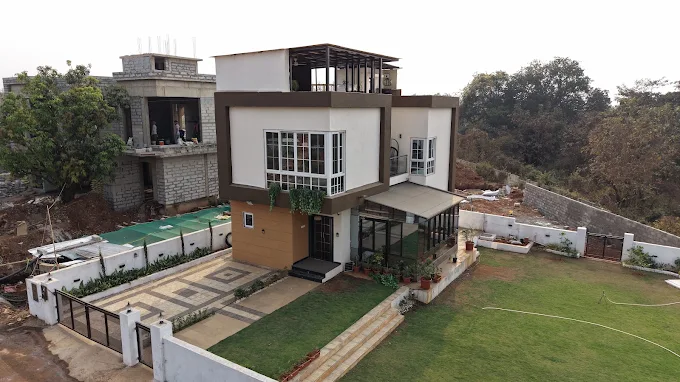
Many second-home owners do not occupy their properties throughout the year. A villa might be used during holidays, long weekends, or occasional family visits and remain vacant during the rest of the year.
Renting the property during these unused periods can create an additional income stream. It may also help contribute towards recurring expenses such as maintenance, utilities, housekeeping, and property management.
However, rental income should not be viewed as automatic. Occupancy levels can change throughout the year, and owners need to account for both income and expenses when evaluating the financial potential of a property
Location is one of the most important factors affecting a second home’s rental potential.
Properties located near major cities, tourist attractions, nature destinations, highways, and popular weekend destinations may have access to a wider pool of potential guests.
For example, people living in Mumbai and Navi Mumbai often look for destinations that can be reached within a few hours for short breaks. This has contributed to interest in destinations such as Karjat, where natural surroundings and proximity to Mumbai make it suitable for weekend travel.
Look at Accessibility
A property that is difficult to reach may receive fewer enquiries even if the property itself is attractive.
When evaluating a second home, consider:
- Road connectivity
- Distance from major cities
- Availability of public and private transport
- Nearby attractions
- Local tourism activity
- Accessibility during different seasons
Good accessibility can make a property more practical for short-stay guests.
Understand Your Target Rental Audience
Not every second home attracts the same type of guest.
A smaller property may appeal to couples or small families, while a larger villa with multiple bedrooms and private outdoor spaces may be suitable for families, groups, or corporate teams.
Understanding the intended audience can help determine how the property should be furnished, marketed, and priced.
Families and Weekend Travellers
Families often look for privacy, comfortable bedrooms, outdoor areas, parking, kitchens, and recreational facilities.
A property that offers these conveniences can be positioned as a private weekend getaway rather than simply a place to stay overnight.
Corporate Groups and Remote Teams
The growth of flexible and hybrid work has also created demand for properties suitable for team gatherings and corporate retreats.
Villas with multiple bedrooms, comfortable common spaces, reliable internet, meeting areas, and recreational facilities can potentially appeal to companies looking for an alternative setting for offsites.
Make Your Second Home Suitable for Guests
A property used personally by an owner may need some improvements before it is offered to paying guests.
Guests generally expect cleanliness, privacy, safety, comfort, and basic conveniences.
The property should have properly maintained bedrooms and bathrooms, functional appliances, comfortable furniture, adequate lighting, reliable internet where required, and clean outdoor spaces.
Invest in Practical Amenities
Amenities can influence how guests perceive the overall value of a property.
Depending on the property type, useful features may include:
- Private swimming pool
- Garden or landscaped outdoor space
- Outdoor seating
- Parking
- Wi-Fi
- Fully equipped kitchen
- Entertainment areas
- Work-friendly spaces
- Power backup
The objective is not to add every possible facility. Instead, amenities should match the property’s target audience and the expectations of guests in that location.
Decide Between Short-Term and Long-Term Rental
Before listing the property, decide what type of rental model suits your requirements.
Short-Term Rental
Short-term rentals usually involve stays ranging from one or two nights to several days or weeks.
This model can provide flexibility because owners can reserve specific dates for personal use. However, it also requires more active management because bookings, cleaning, guest communication, and maintenance need to be handled regularly.
Long-Term Rental
Long-term rentals can provide more predictable occupancy because the property is rented to one tenant for an extended period.
The trade-off is flexibility. Owners may have less opportunity to use the property themselves during the rental period.
The right choice depends on whether your priority is personal use, predictable occupancy, or flexibility.
Set a Realistic Rental Price
Rental pricing should be based on the local market rather than simply the purchase price of the property.
Research similar properties in the same destination and compare their location, size, amenities, occupancy capacity, reviews, and pricing.
Rental rates can also change depending on demand.
Use Seasonal Pricing
Weekend periods, public holidays, school vacations, festivals, and peak travel seasons may attract higher demand than ordinary weekdays.
During quieter periods, owners may need to offer competitive rates or longer-stay packages to encourage bookings.
Instead of maintaining one fixed price throughout the year, consider adjusting rates according to actual demand.
Market Your Second Home Effectively
A rental property needs visibility to generate enquiries.
Professional photography is particularly important because potential guests usually evaluate the property online before making a booking.
Photographs should clearly show the bedrooms, living areas, bathrooms, outdoor spaces, views, amenities, and surrounding environment.
The property description should also provide accurate information about capacity, facilities, location, check-in procedures, house rules, and any additional charges.
Manage Maintenance and Operating Costs
Rental income should always be considered alongside operating expenses.
A second-home owner may need to pay for cleaning, utilities, repairs, landscaping, pool maintenance, property management, furnishing replacements, and other recurring costs.
A property that generates substantial gross rental income may still produce a much smaller net amount after these expenses.
Calculate Net Rental Income
A simple calculation can provide a more realistic picture:
Net Rental Income = Total Rental Income − Property Operating Expenses
For example, if a property generates ₹8 lakh in annual rental income but costs ₹2 lakh to operate and maintain, the approximate income remaining before other applicable costs would be ₹6 lakh.
This is more useful for financial planning than looking only at the total booking revenue.
Consider Professional Property Management
Managing a rental property from a distance can be challenging.
If the second home is located in another city or state, someone needs to handle guest communication, cleaning, maintenance, check-ins, and unexpected problems.
A professional property management service can take care of these responsibilities for a fee.
For owners purchasing a second home near Mumbai while living elsewhere, professional management can make regular rental operations easier.
Check Property and Community Rules
Before renting out a second home, owners should check the applicable rules and restrictions.
Some residential communities may have specific policies regarding short-term rentals, guest access, commercial activity, parking, or use of shared amenities.
If the property is part of a gated community, confirm the community’s rules before creating a rental plan.
Legal, tax, registration, safety, and local regulatory requirements should also be reviewed based on the property’s location and rental model.
Can a Second Home Become a Rental Investment?
A second home can potentially serve both lifestyle and investment purposes, but rental income is not guaranteed.
The outcome depends on factors such as location, demand, occupancy, rental pricing, property quality, operating expenses, and management.
For buyers considering a second home in Karjat, it can be useful to study local rental demand, travel patterns, competing properties, accessibility, and the type of guests visiting the area before purchasing.
Turn Your Second Home into a Lifestyle Asset
At Holistic Group, our thoughtfully planned villa communities Trulife and Goodlife in Karjat offer an opportunity to own a premium second home that combines personal enjoyment with potential rental value. With well-planned villas, lifestyle amenities, private spaces, and a nature-rich setting, these communities are designed for memorable weekend stays and extended getaways. If you are considering a second home investment near Mumbai, Holistic Group offers properties that can complement both your lifestyle aspirations and long-term property goals, subject to applicable rental and community guidelines.
Think About Long-Term Property Value Too
Rental income is only one part of a second-home investment decision.
Buyers should also consider the property’s construction quality, location, infrastructure, maintenance standards, legal documentation, community development, and potential long-term usability.
A property that works well for personal use while also having rental potential can offer greater flexibility over the ownership period.
Final Thoughts
Generating rental income from a second home requires planning rather than simply listing the property online. Location, target guests, amenities, pricing, marketing, maintenance, operating costs, and property management all influence the actual rental potential.
For someone considering a second home investment, the first step is to understand the local market and calculate both potential income and ownership expenses. This provides a more realistic basis for deciding whether a property fits your personal and financial objectives.
Destinations such as Karjat can be considered by buyers looking for a second home near Mumbai, particularly when evaluating properties that combine accessibility, privacy, amenities, and suitability for weekend stays. The final decision should be based on the property’s specific characteristics and the buyer’s long-term goals.
FAQs
1. Can a second home generate rental income?
Yes. A second home can generate rental income when it is located in an area with rental demand and is properly priced, marketed, maintained, and managed.
2. Is renting out a second home profitable?
Profitability depends on factors such as occupancy, rental rates, maintenance expenses, property management costs, taxes, and the property’s purchase price. Gross rental income should not be treated as net profit.
3. What type of second home is suitable for rental income?
Properties with good accessibility, comfortable accommodation, privacy, attractive surroundings, and useful amenities can appeal to families, groups, holidaymakers, and corporate guests.
4. Is Karjat a suitable location for a second home?
Karjat is a popular weekend destination near Mumbai, with natural surroundings and connectivity to the Mumbai region. Buyers should evaluate local rental demand, accessibility, property type, and operating costs before purchasing.
5. Should I choose short-term or long-term rental for my second home?
Short-term rentals can provide greater flexibility for personal use, while long-term rentals can offer more predictable occupancy. The appropriate model depends on your ownership goals and local rental demand.
6. How can I increase the rental potential of my second home?
Maintaining the property well, providing practical amenities, using professional photography, setting competitive prices, responding quickly to enquiries, and maintaining good guest reviews can help improve its rental potential.
7. What expenses should I consider before renting my second home?
Consider maintenance, utilities, cleaning, repairs, property management, furnishing, platform fees, taxes, and periods when the property remains vacant.
8. Can I use my second home while renting it out?
Yes. With a short-term rental model, owners can generally block dates for personal use and make the remaining dates available for guests, subject to applicable property and community rules.